
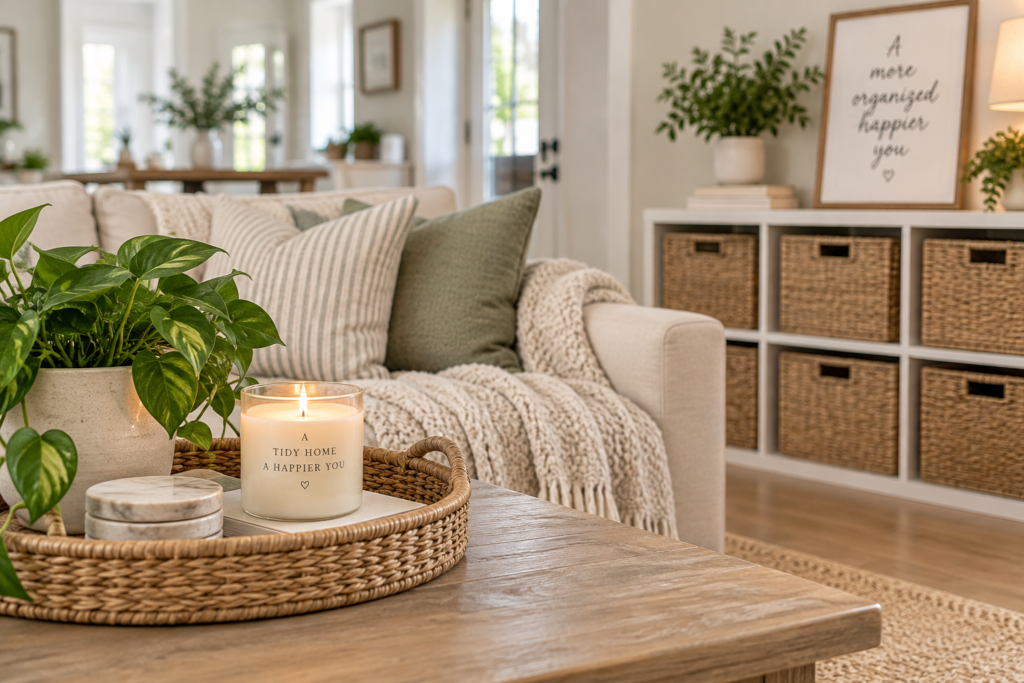
A more organized home doesn’t have to mean buying dozens of matching bins or spending an entire weekend decluttering. Sometimes, the smallest changes can make the biggest difference. These simple organization ideas are designed to help your home feel calmer, function better, and make everyday life a little easier—without completely overhauling your space or your budget.
Whether you’re dealing with cluttered countertops, overflowing drawers, or rooms that never seem to stay tidy, start small. You don’t need to organize everything at once. Pick one idea that feels manageable, give it a try, and build from there.
1. Start With One Small Space
Trying to organize an entire room at once can quickly become overwhelming. Instead, choose one small area you can finish in 10 or 15 minutes—a single drawer, one bathroom cabinet, a section of your pantry, or even just the top of your nightstand.
Take everything out, remove anything you no longer need, and put back only what belongs there. Finishing one small space gives you an immediate win and makes it much easier to tackle the next one.
THE HELPFUL EDIT TIP
Start with a small space you use every day. You’ll notice a difference immediately.
2. Give Everything a Home
One of the easiest ways to keep clutter from creeping back in is to give the things you use regularly a designated home. When an item doesn’t have a specific place to go, it usually ends up on a countertop, table, chair, or wherever it was last used.
Look at the items that tend to collect around your home—keys, mail, shoes, chargers, toys, bags, or everyday essentials—and decide where each one should live. The solution doesn’t have to be fancy. A drawer you already have, a basket, a small tray, or an empty shelf can work perfectly.
THE HELPFUL EDIT TIP
Choose a home for an item based on where you actually use it—not where you think it “should” go.
3. Clear the Surfaces You See Most
Visual clutter can make an otherwise tidy room feel messy. Instead of trying to clear every surface in your home, start with the ones you see and use the most—like the kitchen counter, coffee table, bathroom vanity, dresser, or entryway table.
Remove anything that doesn’t need to stay there, then be intentional about what you put back. Everyday items can stay if they’re useful, but grouping them together on a tray or in a small basket can make the space feel much more organized without requiring you to hide everything away.
THE HELPFUL EDIT TIP
If a surface constantly becomes a clutter zone, pay attention to what collects there. Those items may be telling you exactly where you need a new storage solution.
4. Use What You Have Before Buying Organizers
It’s tempting to start an organization project by shopping for new bins, baskets, and containers, but organizing first can save you money—and help you avoid buying storage you don’t actually need. Before purchasing anything, look around your home for items you can repurpose.
Small boxes can become drawer dividers, baskets can be moved to places where they’re more useful, and containers sitting empty in one room may solve a storage problem in another. Once you’ve decluttered and figured out exactly what needs a home, you’ll have a much better idea of what—if anything—is actually worth buying.
THE HELPFUL EDIT TIP
Organize first, shop second. If you do need to buy something, measure the space and decide exactly what you need before you start shopping.
5. Create Simple Drop Zones for Everyday Clutter
Some clutter happens simply because we need a convenient place to put things when we walk through the door. Instead of fighting that habit, create small “drop zones” in the places where everyday items naturally tend to land.
A basket near the entryway can hold shoes or bags, a small tray can keep keys and wallets together, and a designated spot for mail can prevent papers from spreading across the kitchen counter. If you have kids, hooks or baskets at their height can also make it easier for them to put away backpacks, jackets, and other everyday belongings.
THE HELPFUL EDIT TIP
Put your drop zone where the clutter already happens. The easiest organization systems are the ones that work with your family’s natural habits instead of trying to change them.
6. Group Similar Items Together
When similar items are scattered throughout your home, it’s easy to forget what you already have—and even easier to buy duplicates. Grouping like items together makes things easier to find, easier to put away, and easier to keep organized over time.
Start with simple categories that make sense for your household. In the pantry, that might mean keeping snacks, breakfast foods, and baking supplies together. In the bathroom, group hair products, first-aid supplies, and everyday toiletries. Kids’ spaces can be organized by things like books, art supplies, stuffed animals, or building toys. You don’t need matching containers; simply giving similar things a consistent place can make a big difference.
THE HELPFUL EDIT TIP
Organize by how you look for things, not by where someone else says they belong. If your family naturally searches for sunscreen by the back door instead of in the bathroom, the back door might be exactly where it should live.
7. Make Putting Things Away as Easy as Possible
An organization system only works if it’s easy enough to maintain. If putting something away requires opening a cabinet, moving another item, lifting a lid, and squeezing it into the perfect spot, there’s a good chance it will eventually end up sitting on the counter instead.
Look for ways to remove unnecessary steps. Open baskets can work well for things you grab often, hooks can be easier than hangers, and frequently used items should be stored somewhere easy to reach. The goal isn’t to create the prettiest system—it’s to create one your household will actually use.
THE HELPFUL EDIT TIP
If something repeatedly gets left out, don’t automatically blame the habit. Ask whether putting it away is harder than it needs to be. Sometimes the best organization fix is simply removing one extra step.
8. Try the One-In, One-Out Rule
Sometimes staying organized has less to do with finding more storage and more to do with being intentional about what comes into your home. The one-in, one-out rule is a simple way to keep certain categories from slowly becoming overcrowded.
When you bring home something new, consider letting go of a similar item you no longer use or need. A new shirt might replace one you never wear, a new toy can be an opportunity to donate one your child has outgrown, and a new kitchen gadget might replace something that has been collecting dust. You don’t have to follow the rule perfectly—think of it as a helpful habit rather than another household rule to stress about.
THE HELPFUL EDIT TIP
Don’t wait until you run out of space to decide what stays. When something new comes in, take a few seconds to ask whether there’s something you already own that no longer earns its spot.
9. Do a 10-Minute Reset
Even the best organization systems won’t keep a home perfectly tidy all the time—and they don’t need to. A quick daily reset can keep small messes from turning into overwhelming ones without requiring hours of cleaning.
Choose one time of day that naturally works for you and spend just 10 minutes putting things back where they belong. Clear the kitchen counter, return toys to their baskets, straighten the living room, or gather anything that wandered into the wrong room. You can focus on one space or simply tackle whatever will make tomorrow feel a little easier.
THE HELPFUL EDIT TIP
Don’t use your 10-minute reset to start new projects. Focus only on putting things back where they belong. When the timer ends, you’re done—even if everything isn’t perfect.
10. Choose Progress Over Perfection
An organized home doesn’t have to look perfect to make your life easier. There will still be toys on the floor, dishes in the sink, mail on the counter, and days when nothing gets put back where it belongs. That doesn’t mean your organization systems aren’t working—it just means your home is being lived in.
Instead of aiming for a perfectly organized home, focus on creating spaces that are easier to use and easier to reset. A drawer that works better than it did yesterday or a basket that keeps one clutter pile off the counter is still progress. Small improvements add up, and the best systems are the ones that continue working even when life gets busy.
THE HELPFUL EDIT TIP
Your home doesn’t need to stay organized every minute of the day. A good system isn’t one that never gets messy—it’s one that makes getting back to organized easier.
You don’t need a huge budget, a house full of matching containers, or an entire weekend to make your home feel more organized. Start with one small space, create systems around the way you actually live, and make changes that are easy enough to maintain. Little by little, those small edits can make everyday life feel a whole lot easier.
Looking for more ways to simplify your space? Explore more Home & Organization ideas from The Helpful Edit.