Helping kids become more independent doesn’t have to mean expecting them to do everything on their own. Sometimes, it’s as simple as giving them opportunities to try new things, make small decisions, and take responsibility for everyday tasks.
As a parent, I know how tempting it can be to step in and do something myself, especially when we’re running late or trying to get through a busy day. But I’ve also learned that giving kids a little extra time and encouragement can help them build confidence in what they’re capable of doing.
The good news is that encouraging independence doesn’t require complicated routines, expensive products, or big changes to your home.
Here are five simple ways to help kids become more independent through everyday activities, one small step at a time.
1. Make Everyday Essentials Easy to Reach
One of the simplest ways to encourage independence is to make everyday items easy for kids to reach and put away themselves.
When children have a designated place for their belongings, they don’t have to rely on an adult every time they need something or want to clean up.
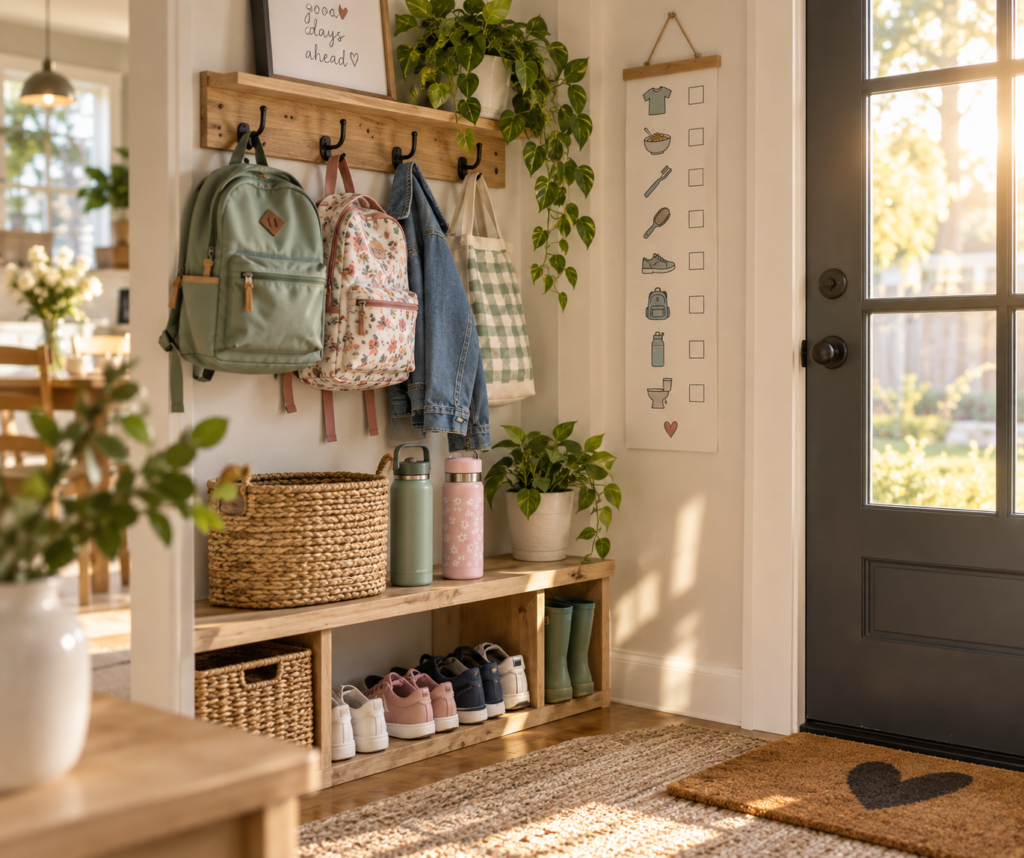
In our home, we use wall-mounted hooks for backpacks and jackets, along with a shoe storage bench near our entryway. Our oldest can hang up her backpack and jacket, put away her shoes, and find what she needs when it’s time to leave.
I love that this setup makes it easier for her to take responsibility for her own belongings without needing constant reminders or help.
You don’t need a large entryway or expensive organization system to make this work. A few hooks, accessible storage bins, or designated shelves can help kids develop simple habits that become part of their everyday routines.
THE HELPFUL EDIT TIP
Try looking at your home from your child’s perspective. Can they reach their backpack? Put away their shoes? Find their everyday belongings without asking for help? Making a few frequently used items easier to access can encourage independence while keeping your home more organized.
2. Create Simple Routines Kids Can Follow
Kids don’t have to do everything independently to start building good habits. Sometimes, simply knowing what comes next in their day can help them feel more confident and capable.
One thing that’s worked well for our family is keeping certain parts of our daily routine consistent. Our oldest has small responsibilities throughout the day that she’s gradually learning to manage on her own.
In the morning, she brushes her teeth before we go over them again to make sure they’re thoroughly cleaned. She also gets her shoes, jacket, and backpack when it’s time to leave.
After school, she has her chore checklist to help her remember what needs to be done without having to rely on us to tell her every step.
At bedtime, she practices more independent skills, including bathing or showering with age-appropriate supervision, learning how to wash her hair, brushing her teeth before we finish helping, putting on her pajamas, and choosing the books we’ll read together.
None of these routines require her to do everything perfectly or completely on her own. They’re simply opportunities to practice everyday skills with support when she needs it.
The more familiar these routines become, the easier it is for kids to recognize what they’re responsible for and begin taking initiative.
THE HELPFUL EDIT TIP
Start with just two or three simple steps your child can practice during a familiar routine. A picture checklist can be especially helpful for younger children who aren’t reading independently yet. As they become more comfortable, gradually give them opportunities to complete additional steps on their own.
3. Give Kids Age-Appropriate Responsibilities
One of my favorite ways to encourage independence is by giving kids small responsibilities they can manage on their own.
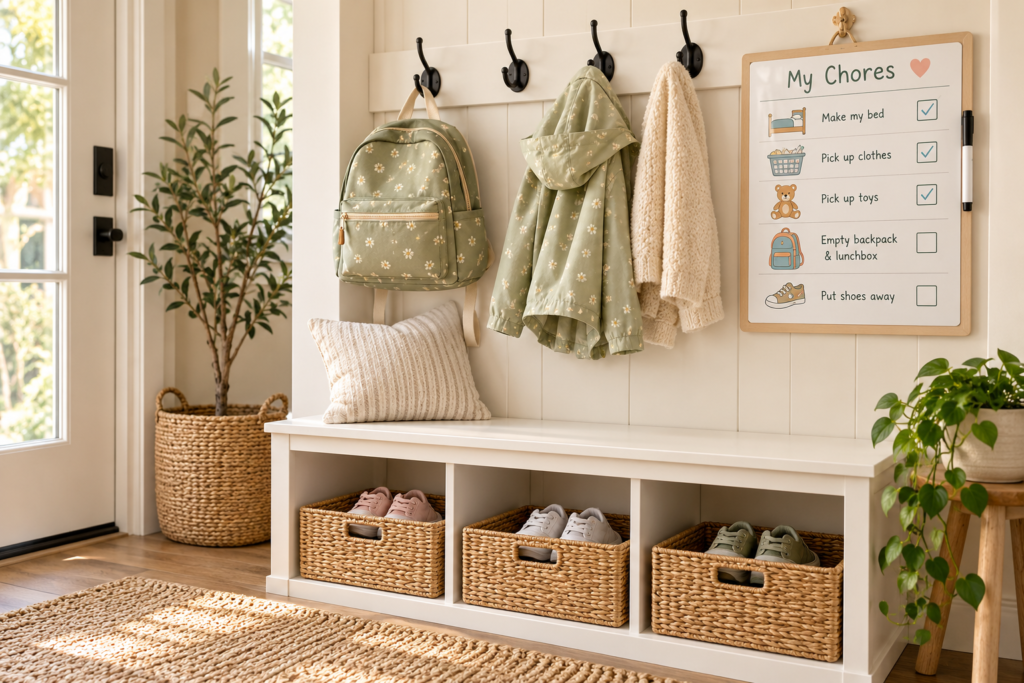
For our oldest, we created a simple daily chore chart with pictures and short descriptions underneath each task. Since she’s learning how to read, the pictures help her recognize what needs to be done while the words give her an opportunity to practice reading.
Her chores include making her bed, picking up clothes and toys, emptying her backpack and lunchbox, and putting her shoes away.
I laminated the chart so she can use a dry-erase marker to cross off each chore as she completes it. Not only does this make the checklist reusable, but it also gives her a visual way to track her progress throughout the day.
We also give her the opportunity to earn one dollar each day she completes her chores. While the reward gives her something to work toward, I especially like that she’s learning to follow a routine, take care of her belongings, and recognize what she’s capable of doing independently.
Chores don’t have to be complicated to be meaningful. Even small responsibilities can help children build confidence and feel like they’re contributing to the family.
THE HELPFUL EDIT TIP
For younger children or early readers, try creating a visual chore chart with a picture and one or two words for each task. Laminating the chart makes it reusable, and letting kids check off completed chores gives them a simple way to see their progress. Start with a few manageable responsibilities and adjust them as your child grows.
4. Offer Choices Instead of Doing Everything for Them
Helping kids become more independent isn’t just about teaching them to complete tasks. It’s also about giving them opportunities to make decisions and discover their own preferences.
In our home, I try to offer choices throughout the day without expecting our kids to make every decision themselves.
For example, our oldest sometimes enjoys picking out her own clothes. Other mornings, she’s tired and would rather have me choose something for her. Both are completely fine!
She also gets to tell me if there’s a particular hairstyle she wants. Since she has a lot of hair and is still young, I usually help with styling it, but she still gets a say in how she’d like it done.
One of my favorite examples happens during our after-school routine. When she empties her backpack and lunchbox, she also gets to choose the snacks she wants packed for the following day from the options we have available.
We also make room for free play when we’re home, giving the kids opportunities to choose what they want to play with and explore their own interests.
These might seem like small decisions, but they give children opportunities to express their preferences, practice making choices, and feel more involved in their everyday routines.
THE HELPFUL EDIT TIP
Try offering two or three manageable choices throughout the day. Let your child choose between two outfits, select a snack from available options, or pick the bedtime story. Giving kids opportunities to make decisions can encourage independence without overwhelming them with too many choices.
5. Make Room for Mistakes and Learning
One of the most important things I’ve learned about encouraging independence is that kids need opportunities to practice, even when they don’t get everything right the first time.
As parents, it can be tempting to step in and finish something ourselves, especially when we’re in a hurry or know we could get it done faster. But learning new skills takes time, patience, and plenty of practice.
When our oldest struggles with something, how I respond depends on the situation. Sometimes I encourage her to try again. Other times, I’ll show her how to do it or help her finish.
I don’t expect her to do everything perfectly, and I don’t think independence should mean having to figure everything out without help.
Whether she’s learning to wash her hair, complete her chores, or manage another everyday responsibility, the goal is to help her become more confident and capable over time.
Even when something doesn’t go as planned, there’s usually an opportunity to learn. Sometimes the most helpful thing we can do is give our kids a little extra time, offer encouragement, and recognize the effort they’re putting in.
THE HELPFUL EDIT TIP
When your child struggles with a task, try asking, “Would you like to try again, or would you like some help?” Giving them a chance to decide what support they need can encourage problem-solving while reminding them that asking for help is always okay.
Independence Starts With Small Everyday Moments
Helping kids become more independent doesn’t happen overnight, and it doesn’t have to involve big changes to your family’s routine.
For us, it’s been about finding small opportunities throughout the day for our kids to practice new skills, make decisions, and take responsibility for things they’re capable of doing.
Whether it’s hanging up a backpack, checking off a chore, choosing tomorrow’s lunchbox snacks, or picking out a bedtime story, those little moments can add up over time.
Every child learns at their own pace, and what works for one family might look different for another. The important thing is finding opportunities that fit your child’s age, abilities, and interests while continuing to offer support when they need it.
Independence isn’t about expecting kids to do everything alone. It’s about helping them build the confidence to try.